Things to Do in Kyoto and What to Buy: 5 Must-See Sights (Fees and Access) and 5 Classic Souvenirs

The top things to do in Kyoto are Fushimi Inari Taisha, Kinkaku-ji, Arashiyama, Kiyomizu-dera and Hanamikoji in Gion. Fushimi Inari and the Bamboo Grove are free; Kinkaku-ji costs ¥500 (9:00–17:00) and Kiyomizu-dera ¥500 (opens 6:00). The classic souvenirs are Uji matcha, yatsuhashi, Kiyomizu-yaki, kyogashi and Kyo-sensu fans. Since March 2026 Kyoto's lodging tax runs from ¥200 to ¥10,000 per person per night, and the city asks visitors to keep large luggage off city buses.
Key takeaways
- Fushimi Inari Taisha is open 24 hours and free; Inari Station is 2 stops (about 5 minutes) from Kyoto Station on the JR Nara Line.
- Kinkaku-ji costs ¥500 (adults) / ¥300 (elementary/junior high students) and is open 9:00–17:00.
- Kiyomizu-dera opens at 6:00 and costs ¥500 (adults) / ¥200 (elementary/junior high students); closing time varies by season.
- From March 1, 2026, Kyoto's accommodation tax has five tiers by room rate per person per night: ¥200, ¥400, ¥1,000, ¥4,000 and ¥10,000.
- From November 1, 2026, Japan's tax-free shopping becomes a refund system: pay the tax in the shop, get it back when you leave.
What are the must-see places in Kyoto? The top 5 at a glance
These five sights cover Kyoto's shrines, temples, scenery and Gion streetscape (check each site's official notice for the latest fees):
| Sight | Admission | Hours | From Kyoto Station | Time needed |
|---|---|---|---|---|
| Fushimi Inari Taisha | Free | 24 hours | JR Nara Line to Inari Station (about 5 min); the shrine is right outside | 1–3 hours |
| Kinkaku-ji | Adults ¥500 / students ¥300 | 9:00–17:00 | Karasuma subway line to Kitaoji, then city bus 204 or 205 to Kinkakuji-michi | About 1 hour |
| Arashiyama (Bamboo Grove, Togetsukyo Bridge) | Grove and bridge are free | Open all day | JR Sagano Line to Saga-Arashiyama, then about a 10-min walk to the grove | Half a day |
| Kiyomizu-dera | Adults ¥500 / students ¥200 | Opens 6:00; closing varies by season | City bus 206 or 100 to Gojozaka, then about a 10-min walk | 1.5–2 hours |
| Hanamikoji (Gion) | Free | Open all day (public street) | About a 5-min walk from Keihan Gion-Shijo Station | 1 hour |
How should you plan a Kyoto sightseeing route?
Group sights by area and give each area its own day: Higashiyama (Kiyomizu-dera, Gion, Hanamikoji) for one day, Arashiyama for half to a full day, and Kinkaku-ji and Fushimi Inari each paired with nearby spots. Kyoto City covers about 828 km² across 11 wards, and the big sights sit in opposite corners, so zigzagging wastes the most time.
Use Kyoto Station as your hub: JR, the subway, Kintetsu and most buses meet here, and Fushimi Inari and Kiyomizu-dera are closest to it.
Top things to do in Kyoto and how to get there
Fushimi Inari Taisha: how do you get to the thousand torii gates?
Take the JR Nara Line from Kyoto Station to Inari Station (about 5 minutes); the shrine entrance is right outside. Traditionally founded in 711, it is the head shrine of roughly 30,000 Inari shrines in Japan, famous for the vermilion torii tunnels climbing Mt. Inari.

The Senbon Torii at Fushimi Inari Taisha. Photo: Wikimedia Commons / Public domain
- Free and open 24 hours; early morning and evening are quietest.
- The Senbon Torii alone take 30–60 minutes; the summit loop takes about 2–3 hours, with steep upper steps.
- Or take the Keihan Main Line to Fushimi-Inari Station, about 5 minutes' walk.
Kinkaku-ji: how much is it, and what's the least crowded way there?
Kinkaku-ji (officially Rokuon-ji) costs ¥500 for adults and ¥300 for elementary/junior high students, open daily 9:00–17:00. Built as shogun Ashikaga Yoshimitsu's villa in 1397, it joined the "Historic Monuments of Ancient Kyoto" World Heritage Site in 1994; the current pavilion was rebuilt in 1955 after a 1950 arson fire.

Kinkaku-ji, the Golden Pavilion. Photo: Nacaru / Wikimedia Commons / CC BY-SA 4.0
Kyoto's official tourism site recommends this less crowded route:
- Take the Karasuma subway line from Kyoto Station to Kitaoji Station (about 15 minutes).
- At Kitaoji Bus Terminal, change to city bus 205 or 204 (about 15 minutes).
- Get off at Kinkakuji-michi and follow the signs.
Bus 205 direct from Kyoto Station, or the JR Sagano Line to Emmachi plus bus 204/205, also work but often hit peak-season traffic.
Arashiyama: how to see the Bamboo Grove and Togetsukyo Bridge
Take the JR Sagano Line from Kyoto Station to Saga-Arashiyama (about 15 minutes), then walk about 10 minutes to the Bamboo Grove. The grove and Togetsukyo Bridge are free and always open; cherry blossom season (March–April) and autumn leaves (November) are busiest.

The Arashiyama Bamboo Grove. Photo: Basile Morin / Wikimedia Commons / CC BY-SA 4.0
- The bamboo path is only a few hundred meters long; for crowd-free photos, arrive before 8 a.m.
- Torokko Saga Station (Sagano Romantic Train) is next door; the train doesn't run in winter, see the Sagano Scenic Railway website.
- From Shijo-Kawaramachi, take Hankyu to Arashiyama Station and cross Togetsukyo Bridge.
Kiyomizu-dera: admission, opening hours and access
Kiyomizu-dera opens at 6:00 and costs ¥500 for adults and ¥200 for elementary/junior high students; it closes in the early evening (varies by season), with night openings in spring, summer and autumn. Founded in 778, it is famous for its wooden stage over the hillside, and the Otowa Waterfall's three streams are said to bring success in study, love and long life.
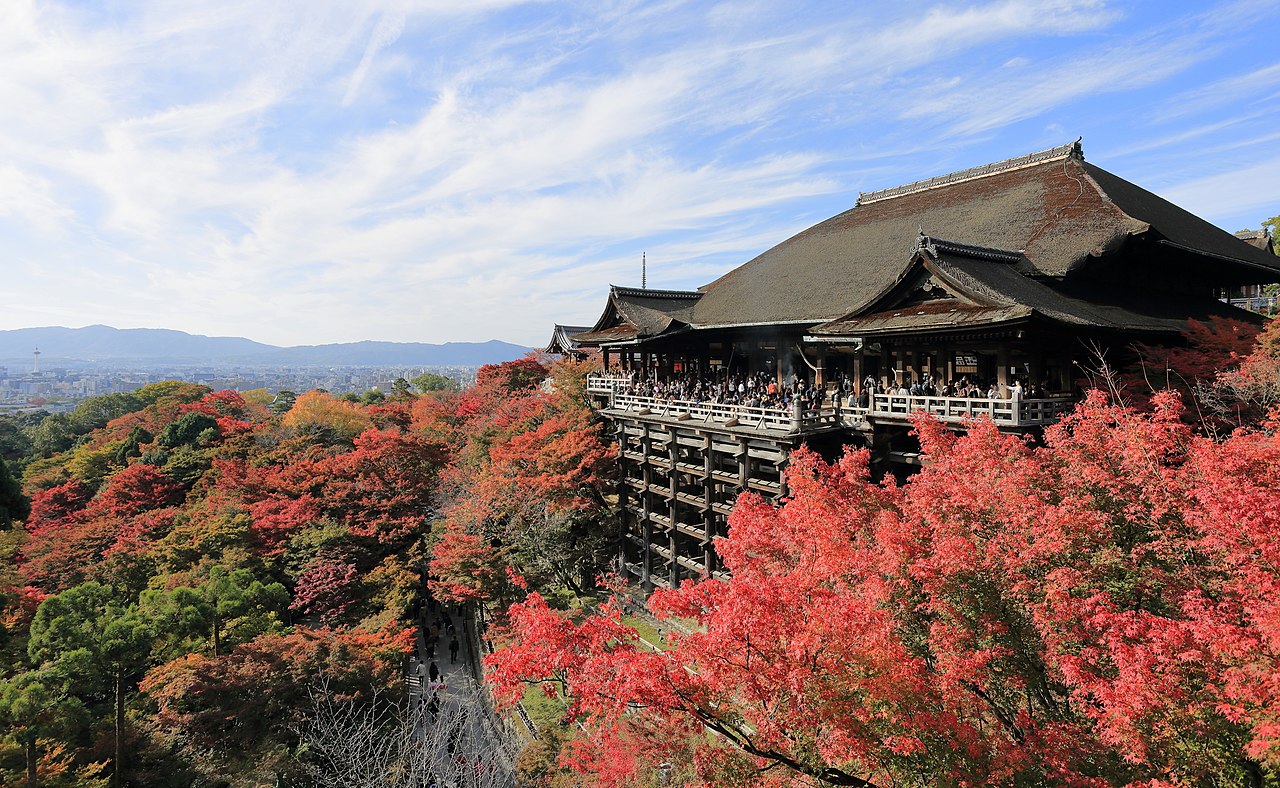
Kiyomizu-dera and its wooden stage in November. Photo: Martin Falbisoner / Wikimedia Commons / CC BY-SA 4.0
- City bus 206 or 100 from Kyoto Station to Gojozaka, then about 10 minutes uphill.
- Weekends and holidays: EX101 express bus direct to Gojozaka, ¥500 (adults).
- To skip the buses: Keihan to Kiyomizu-Gojo, then about 25 minutes on foot.
- Check current hours on the Kiyomizu-dera website.
Hanamikoji and Gion: can you take photos?
Yes on Hanamikoji itself, a public street, but the private alleys off it are closed to visitors and you shouldn't photograph geiko or maiko without permission. The stone-paved street, about 1 km long, is lined with townhouses and teahouses, about 5 minutes' walk from Keihan Gion-Shijo or 10 minutes from Hankyu Kyoto-Kawaramachi.

Hanamikoji street in Gion. Photo: Christophe95 / Wikimedia Commons / CC BY-SA 4.0
If you see geiko or maiko in the evening, keep your distance, don't block their way and never touch their kimono.
What new rules apply in Kyoto in 2026?
The three to know: a higher accommodation tax, bus anti-crowding measures and Gion's private-alley restrictions.
How much is Kyoto's accommodation tax in 2026?
Since March 1, 2026, the tax has five tiers by room rate per person per night, topping out at ¥10,000 (previously ¥1,000). Most hotels collect it at check-in; see the official Kyoto City tourism notice.
| Room rate per person per night | Tax from March 2026 |
|---|---|
| Under ¥6,000 | ¥200 |
| ¥6,000 to under ¥20,000 | ¥400 |
| ¥20,000 to under ¥50,000 | ¥1,000 |
| ¥50,000 to under ¥100,000 | ¥4,000 |
| ¥100,000 and above | ¥10,000 |
What if Kyoto's city buses are too crowded?
Use the subway and trains where you can: the flat bus fare is ¥230, but routes 206, 100 and 205 are often packed in peak season. The bus-only 1-day pass stopped selling in September 2023; the Subway & Bus 1-Day Pass (¥1,100, adults) remains. Separate resident and visitor fares are planned, expected from fiscal 2027 at the earliest; check the Kyoto City Transportation Bureau.
Gion's private-alley entry ban
Since April 2024, private alleys in southern Gion (Gion-machi Minamigawa) carry "Private road, no entry" signs, and photography on these roads has been banned since 2019, with signs warning of fines up to ¥10,000. Hanamikoji itself is a public road and stays open.
What to buy in Kyoto: the best souvenirs and where to find them
Buy Uji matcha, yatsuhashi, Kyo-yaki/Kiyomizu-yaki, kyogashi and Kyo-sensu fans; nearly all are sold in the department stores and souvenir arcades around Kyoto Station.
| Souvenir | What it is | Where to buy | Tips |
|---|---|---|---|
| Uji matcha | Matcha powder and matcha sweets | Byodo-in approach in Uji, Kyoto Station | Keep opened matcha in the fridge and use it soon |
| Yatsuhashi | Baked and soft (nama) yatsuhashi | Kyoto Station, Kiyomizu-dera approach | Nama yatsuhashi keeps for less time; check the label |
| Kyo-yaki / Kiyomizu-yaki | Handmade ceramic bowls, cups and plates | Gojozaka and Chawanzaka | Fragile; ask the shop for extra wrapping |
| Kyogashi | Seasonal wagashi sweets | Long-established sweet shops, department store food halls | Fresh namagashi usually must be eaten the same day or soon after |
| Kyo-sensu | Handmade bamboo-and-paper folding fans | Old shops around Gion and Shijo | Light and crush-proof, the easiest to pack |
Uji matcha
Uji matcha, from Uji in southern Kyoto Prefecture, is prized for its vivid green color, rich aroma and gentle bitterness. Besides the powder, matcha chocolates, cookies and cakes make easy gifts; Uji's old tea shops are 20–30 minutes from Kyoto Station on the JR Nara Line.
Yatsuhashi
Kyoto's signature sweet dates back to the Edo period and comes in two styles: baked yatsuhashi, crisp cinnamon rice-flour crackers, and nama yatsuhashi, soft triangles usually filled with red bean paste or flavors like matcha, chocolate and strawberry. Baked yatsuhashi keeps longer, so it travels better.

Nama yatsuhashi. Photo: Wikimedia Commons / Public domain
Kyo-yaki / Kiyomizu-yaki
Kyoto's traditional pottery is named after the kilns that clustered on the approach to Kiyomizu-dera. Tea bowls, cups and small plates are mostly handmade; shops concentrate around Gojozaka and Chawanzaka, and some workshops offer pottery classes.
Kyogashi
Kyogashi are traditional wagashi served with matcha at tea ceremonies, shaped to the season, from spring cherry blossoms to autumn maple leaves. They are handmade from red beans, glutinous rice and sugar; for gifts, dry higashi or boxed sweets with a longer shelf life are safer.
Kyo-sensu
These handmade fans of bamboo ribs and washi paper are painted with flowers, birds, landscapes or classical motifs, practical and collectible. They take up the least luggage space of any Kyoto souvenir.
Tax-free shopping becomes a refund system from November 2026
From November 1, 2026, you pay the full price including 10% consumption tax in the shop and get the tax refunded after customs checks your goods on departure. Sealed packaging for consumables and the goods/consumables split are dropped, but you must show your purchases when leaving, so allow extra airport time; see the Japan National Tourism Organization notice.
Too many souvenirs or a big suitcase in Kyoto? How to handle luggage
A large suitcase makes Kyoto hard work: the city's official Hands-Free Kyoto site asks visitors not to bring large luggage onto city buses, popular routes are already crowded, and Kiyomizu-dera and Arashiyama involve slopes and stone paving. After checkout, or with heavy, fragile souvenirs like pottery and matcha, your bags become the biggest burden.
Three common solutions:
- Store bags in coin lockers or a luggage counter at Kyoto Station (often full in peak season).
- Leave them at your hotel and come back for them later.
- Use a luggage delivery service to send them straight to your next stop.
With LuggAgent, you leave your bags at the hotel front desk at checkout; we pick them up and deliver them the same or next day to your next hotel, the airport or a station, so you can spend your last hours in Kyoto hands-free. See Kyoto luggage delivery.
Whether you're arriving from Kansai Airport, coming from Tokyo, or moving on from Kyoto to Osaka, you can book these routes directly:
FAQ
How many days do you need for Kyoto's must-see sights?
Plan at least 2–3 days for a first visit: Kiyomizu-dera and Gion on day 1, Arashiyama on day 2, Fushimi Inari and Kinkaku-ji on day 3. Add half a day for Uji.
How much is Kiyomizu-dera's entrance fee, and when does it open?
Kiyomizu-dera costs ¥500 for adults and ¥200 for elementary/junior high students and opens daily at 6:00; closing time varies by season. Spring, summer and autumn night openings run into the evening, with dates on the temple's official website.
Do you need a ticket for Fushimi Inari Taisha?
No. Fushimi Inari Taisha is free and open 24 hours. The Senbon Torii alone take 30–60 minutes; the full loop over Mt. Inari takes about 2–3 hours.
How much is Kyoto's accommodation tax in 2026?
From March 1, 2026, per person per night: ¥200 under ¥6,000, ¥400 for ¥6,000–20,000, ¥1,000 for ¥20,000–50,000, ¥4,000 for ¥50,000–100,000, and ¥10,000 for ¥100,000 and above. It is usually charged at hotel check-in.
Can you take a suitcase on Kyoto city buses?
Kyoto City asks visitors not to bring large luggage onto city buses, because popular routes are often full and residents rely on them. Take the subway or JR, or store or send your bags ahead, for example with LuggAgent.
Is tax-free shopping still available in Kyoto in 2026?
Yes, but from November 1, 2026 it works as a refund: pay the full price including 10% tax, then get it back after customs checks your goods on departure. Purchases up to October 31, 2026 use the old instant system.
Cover photo: Basile Morin / Wikimedia Commons / CC BY-SA 4.0
This article offers general travel tips for reference only. For actual services and conditions, please rely on the booking page and the latest official announcements.
Travelling light starts here.
Send your bags at the airport, your hotel or your homestay — we deliver them to your next destination.