Best Sushi in Tokyo: Toyosu Market, Conveyor-Belt Sushi and Ginza Omakase, with Prices and Booking Tips

The best sushi in Tokyo comes in three price bands. Conveyor-belt sushi starts at about ¥115 a plate. Restaurants inside Toyosu Market cost about ¥2,000–8,000 a meal; the market is open to visitors 5:00–17:00 and closed on Sundays, public holidays and some Wednesdays. High-end Ginza counters charge from about ¥8,000 at lunch and ¥16,500 at dinner, and most need a reservation. Go to the market in the morning: most of its restaurants close by 2–3 p.m.
Key takeaways
- Toyosu Market is open to visitors 5:00–17:00 with free entry, and closed on Sundays, public holidays and market holidays (mostly Wednesdays).
- Sushi Dai, the most famous shop at Toyosu, opens about 5:30–14:00, takes cash only and no reservations; budget about ¥7,000.
- Chains such as Sushiro and Kura Sushi start at about ¥115 a plate; central-Tokyo branches and special items cost more.
- Ginza Kyubey's lunch courses start at ¥8,250 and dinner at ¥16,500 (plus 10% service at dinner); it is closed on Sundays and Mondays.
- Famous counters such as Sukiyabashi Jiro and Sushi Saito are effectively closed to public bookings.
What types of sushi can you eat in Tokyo?
Nigiri is the type you will see most in Tokyo, followed by maki rolls, temaki, chirashi, oshizushi, inari and uramaki. "Sushi" refers to the vinegared rice (shari), and the toppings or fillings are called neta. Today's nigiri style was born in Edo, the old name for Tokyo, which is why it is also called Edomae sushi.
| Type | Japanese | What it is | Where to eat it in Tokyo |
|---|---|---|---|
| Nigiri | 握り寿司 | Hand-pressed rice topped with fish; the signature of Edomae sushi | Sushi counters, conveyor-belt sushi |
| Maki | 巻き寿司 | Rice and filling rolled in nori with a bamboo mat, then sliced | Supermarkets, convenience stores, sushi shops |
| Temaki | 手巻き | Nori rolled into a cone and eaten by hand | Conveyor-belt sushi, izakaya |
| Chirashi | ちらし寿司 | Sashimi and toppings scattered over a bowl of rice | Market eateries, sushi lunch sets |
| Oshizushi | 押し寿司 | Pressed in a wooden box; mackerel battera is the best known | Department-store food halls, station bento |
| Inari | いなり寿司 | Rice stuffed into sweet-savoury fried tofu pouches | Supermarkets, bento shops |
| Uramaki | 裏巻き | Inside-out roll with rice outside, often topped with sesame or roe | Conveyor-belt sushi, Western-style sushi bars |

Chirashi-zushi. Photo: Arashiyama / Wikimedia Commons / CC BY-SA 3.0

Kanto-style inari sushi. Photo: Ocdp / Wikimedia Commons / CC BY-SA 3.0
How to eat sushi at Toyosu Market: hours, closing days and access
Toyosu Market is open to visitors 5:00–17:00 with free entry, but its restaurants open at dawn and mostly close by 2–3 p.m., so aim to arrive between 8:00 and 11:00. The market is closed on Sundays, public holidays and market holidays (mostly Wednesdays); check the closing calendar on the Tokyo Metropolitan Central Wholesale Market website before you go.
- Access: take the Yurikamome line to Shijo-mae Station, about a 3-minute walk. You can change to the Yurikamome at Shimbashi (JR and Tokyo Metro).
- Where the restaurants are: about 38 eateries in total: 22 on the 3rd floor of the Fisheries Intermediate Wholesale Market building, 13 on the 3rd floor of the Administration building and 3 on the 1st floor of the Fruit and Vegetable building.
- Tuna auction: you can watch through the windows of the visitor gallery in the Fisheries Wholesale Market building; the lower viewing deck needs an online lottery entry in advance.

Frozen tuna in Toyosu Market's Block 7 fisheries wholesale building. Photo: 江戸村のとくぞう / Wikimedia Commons / CC BY-SA 4.0
Best sushi restaurants at Toyosu Market
All four are inside the market. Hours and prices change often, so go by what the shop posts on the day:
| Restaurant | Location | Hours (approx.) | Budget / highlight | Good to know |
|---|---|---|---|---|
| Sushi Dai (寿司大) | Fisheries Intermediate Wholesale building, 3F | 5:30–14:00 | About ¥7,000, chef's omakase set | Cash only, no reservations, queues of an hour or more are common |
| Daiwa Sushi (大和寿司) | Fruit and Vegetable building, 1F | Early morning to early afternoon | About ¥6,000–8,000 | Another famous queue, like Sushi Dai |
| Iwasa Sushi (岩佐寿司) | Inside the market, 3F | 6:00–15:00 | Nigiri and seafood bowls from about ¥2,200 | Closed Sundays, public holidays and market holidays |
| Iso Sushi (磯寿司) | Fisheries Intermediate Wholesale building, 3F | 6:00–15:00 | Known for tuna nigiri sets | May stop seating around 14:00 when busy |
Toyosu Senkyaku Banrai: sushi when the market is closed
Toyosu Senkyaku Banrai is a visitor complex that opened next to the market in February 2024, about a 4-minute walk from Shijo-mae Station. Most of its restaurants stay open into the evening (roughly 10:00–22:00, depending on the shop), so it is the fallback if you arrive in the afternoon or on a market holiday.
Can you still eat sushi at Tsukiji Outer Market?
Yes. When the wholesale market moved to Toyosu in 2018, the shops of Tsukiji Outer Market stayed put, and you can still find sushi counters, seafood bowls, tamagoyaki stalls and dried-goods shops there. It is a short walk from Tsukiji Station (Tokyo Metro Hibiya line) or Tsukijishijo Station (Toei Oedo line). Most shops open early and start closing soon after midday, and some close on Sundays, public holidays and Wednesdays; check the calendar on the Tsukiji Outer Market website.
Cheap sushi in Tokyo: how much do conveyor-belt and supermarket sushi cost?
The cheapest way to eat sushi in Tokyo is a supermarket pack or a conveyor-belt chain, where ¥1,000–2,000 per person is enough for a full meal. Rough price levels:
| Type | Price (approx.) | Best for |
|---|---|---|
| Supermarket and convenience-store packs | A few hundred yen to just over ¥1,000 a pack | A late-night snack at the hotel, tightest budgets |
| Conveyor-belt chains (Sushiro, Kura Sushi, Hama Sushi, etc.) | From about ¥115 a plate; more in central Tokyo and for special items | Families, first-time visitors |
| Toyosu and Tsukiji market sushi shops | About ¥2,000–8,000 | Fresh market sushi |
| High-end counters in Ginza and elsewhere | Lunch from about ¥8,000, dinner from ¥16,500 | Celebrations, an omakase experience |
At conveyor-belt restaurants, plate colours or patterns show the price, and most chains now take orders on a tablet and send dishes straight to your seat on an express lane.

A supermarket sushi pack. Photo: Yumi Kimura / Wikimedia Commons / CC BY-SA 2.0
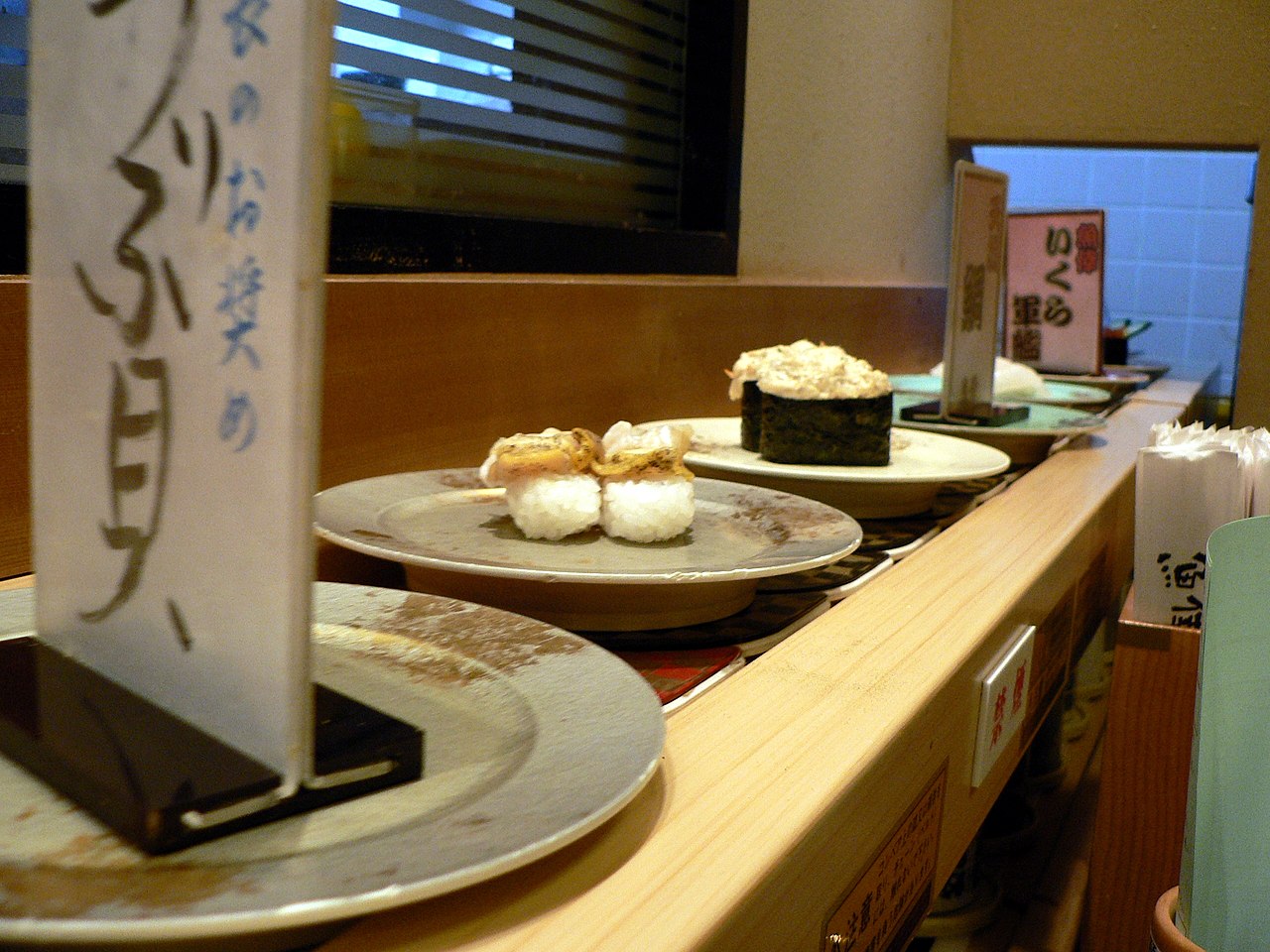
A conveyor-belt sushi counter in Japan. Photo: MissionControl from Kyoto / Wikimedia Commons / CC BY-SA 2.0
Best sushi in Tokyo for a splurge: 3 Ginza restaurants and how to book them
Ginza has Tokyo's densest cluster of high-end sushi counters, and all three below accept bookings from visitors. Details as published by each restaurant:
| Restaurant | Address | Hours | Price | How to book |
|---|---|---|---|---|
| Ginza Kyubey (main restaurant) | 8-7-6 Ginza, Chuo-ku | 11:30–14:00 and 17:00–22:00; closed Sundays and Mondays | Lunch from ¥8,250, dinner from ¥16,500 | Phone, My Concierge Japan, IKYU, hotel concierge |
| Ginza Sushi Aoki | 4F Daisan Iwatsuki Bldg, 6-7-7 Ginza, Chuo-ku | 12:00–14:00 and 17:00–22:00 | Omakase courses, priced by season | IKYU online or phone |
| Sushi Yuu (鮨由う) | 8F GINZA LOUIS, 1-14-6 Ginza, Chuo-ku | Dinner 17:30–23:00, plus Saturday lunch; closed 8 days a month, mainly Tue/Wed | Dinner about ¥25,000 | Phone; 100% fee for cancellations within 3 days |
Ginza Kyubey
Founded in 1935, Ginza Kyubey is credited with inventing gunkan maki, the "battleship" roll that wraps nori around rice to hold soft toppings such as salmon roe and sea urchin. The main restaurant has counter seats, tables and private rooms. The cheapest lunch, the 10-piece "Oribe" nigiri course, costs ¥8,250, and the "Kyubey" dinner course starts at ¥16,500 plus 10% service; see the Ginza Kyubey website.
Ginza Sushi Aoki
Sushi Aoki is a counter restaurant serving traditional Edomae nigiri on the 4th floor of a building in Ginza 6-chome, about 3 minutes' walk from Ginza Station. It offers two omakase courses of nigiri with small dishes, priced according to the season's fish; groups of five or more pay a 10% service charge. Book through the IKYU page linked from its website.
Sushi Yuu
Sushi Yuu moved from Roppongi to Ginza 1-chome in December 2023 and is about a 5-minute walk from Kyobashi Station on the Ginza line; it is known for its tuna. Dinner costs about ¥25,000, and cancelling within 3 days of your booking costs the full price. These details come from the restaurant's 2024 listing, so confirm by phone before you go.
Flying in or out on a sushi day? What to do with your luggage
Two luggage problems come up again and again: you land and want to go straight to lunch, or you check out and want one last visit to Toyosu before the airport. High-end sushi bars are usually counters of around 10 seats, and market restaurants are cramped with queues at the door, so there is almost nowhere to put a large suitcase; station coin lockers have few large compartments and fill up in peak season.
You have three common options:
- Leave your bags at the hotel and go back for them after the meal (an extra trip).
- Look for a coin locker at a station (few large lockers, often full).
- Use a luggage delivery service to send your bags straight to the hotel or airport.
LuggAgent picks up your luggage at the airport or your hotel and delivers it to your next stop the same day or the next day, so you can go to the sushi counter hands-free. See Tokyo luggage delivery for details.
If you land at Narita and want to head straight to Toyosu or Tsukiji, hand us your bags at the airport and we will take them to your hotel in central Tokyo:
The same works from Haneda: drop off your bags on arrival and go straight to lunch:
FAQ
How much does a sushi meal cost in Tokyo?
It depends on the type of restaurant. Supermarket packs start at a few hundred yen, and conveyor-belt chains start at about ¥115 a plate, so ¥1,000–2,000 per person is enough. Toyosu Market shops cost about ¥2,000–8,000, and high-end Ginza counters start at about ¥8,000 for lunch and ¥16,500 for dinner.
How long is the queue at Sushi Dai, and when should I go?
Sushi Dai opens about 5:30–14:00, takes no reservations and accepts cash only; queues of an hour or more are common, and longer at weekends and in peak season. To queue less, arrive before opening, or try Daiwa Sushi or Iwasa Sushi in the same market.
When is Toyosu Market closed?
Toyosu Market closes on Sundays, public holidays and market holidays, which are mostly Wednesdays but not every Wednesday. Visitor hours are 5:00–17:00; check the closing calendar on the Tokyo Metropolitan Central Wholesale Market website.
Can I book Sukiyabashi Jiro or Sushi Saito?
In practice, rarely. Neither takes public online bookings and both mainly serve regulars, so visitors usually need a luxury hotel concierge with a direct relationship, with no guarantee of a seat. For a reliable high-end meal, book a counter that accepts online reservations, such as Ginza Kyubey or Sushi Aoki.
How can foreign visitors book high-end sushi in Tokyo?
The usual routes are online platforms such as IKYU and My Concierge Japan, or your hotel concierge. Book popular restaurants 1–2 months ahead, and expect steep cancellation fees (Sushi Yuu, for example, charges 100% within 3 days).
Cover photo: City Foodsters / Wikimedia Commons / CC BY 2.0
This article offers general travel tips for reference only. For actual services and conditions, please rely on the booking page and the latest official announcements.
Travelling light starts here.
Send your bags at the airport, your hotel or your homestay — we deliver them to your next destination.